Newsletter Subscribe
Enter your email address below and subscribe to our newsletter

 ByJohn A
Industrial facilities require reliable cooling to maintain process temperatures, protect equipment, and support consistent production. Conventional cooling systems often depend heavily on electricity to drive mechanical compressors. At the same time, many manufacturing processes generate waste heat that is discharged without being put to further use.
Adsorption cooling technology provides an alternative approach by converting suitable thermal energy into useful cooling. Instead of relying primarily on an electrically driven compressor, an adsorption chiller uses heat to drive a refrigeration cycle that produces chilled water. This makes the technology particularly relevant to facilities with a continuous supply of low-grade waste heat or an appropriate solar thermal source.
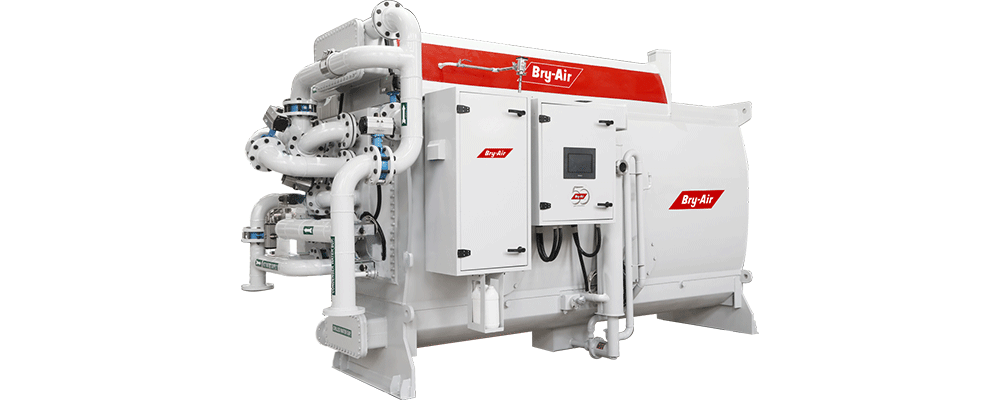
Modern Adsorption Chillers can support industrial process cooling and heating, ventilation, and air conditioning applications. Bry-Air’s systems use a silica gel and water combination to harness available heat and generate chilled water. Their suitability depends on the temperature and availability of the heat source, cooling demand, installation conditions, and the required operating performance.
An adsorption chiller uses a solid adsorbent and a refrigerant to produce cooling. In Bry-Air’s technology, silica gel acts as the adsorbent, while water serves as the refrigerant. The system operates under a vacuum, allowing water to evaporate at a low temperature.
When water evaporates, it absorbs heat from the surrounding environment. In the chiller’s evaporator, this process removes heat from the chilled water circuit, producing the cooling output required by the application.
The silica gel attracts and holds water vapour through adsorption. As the silica gel becomes loaded with moisture, heat is applied to release the water vapour in a process known as desorption. The vapour then moves to the condenser, where it releases heat and returns to liquid form.
The liquid refrigerant returns to the evaporator, and the cycle continues. Two adsorption chambers operate alternately, allowing one chamber to adsorb water vapour while the other undergoes regeneration.
The defining feature of adsorption cooling is its ability to use thermal energy rather than depending primarily on compressor electricity. The heat source may include process waste heat, hot water from industrial operations, or suitable solar thermal energy.
Bry-Air identifies applications involving hot water in the approximate range of 50°C to 100°C, depending on the equipment configuration and operating conditions. The available temperature and heat flow must be assessed before selecting a system because these factors influence the achievable cooling capacity.
The technology is most useful when a facility has both an appropriate heat source and a consistent demand for cooling. Without sufficient heat availability, the expected energy and operating benefits may not be achieved.
Conventional vapour compression chillers use compressors that can account for a substantial portion of a cooling system’s electrical demand. Adsorption chillers use thermal energy to drive the refrigeration process, with electricity primarily required for auxiliary equipment such as pumps and controls.
This difference can help reduce the electricity used for cooling when suitable waste heat is available. The actual reduction depends on the performance of the complete installation, including cooling demand, auxiliary equipment, and operating conditions.
Facilities should compare total energy consumption rather than considering only the chiller itself. Heat recovery equipment, cooling towers, pumps, and other supporting components can influence the overall result.
Industrial processes frequently reject heat through exhaust streams, hot water circuits, condensate, and equipment cooling systems. Some of this heat may be suitable for recovery and use in an adsorption chiller.
Recovering otherwise unused heat can improve the utilisation of energy already consumed by the facility. It may also reduce the need to generate additional electricity for cooling, depending on the site’s existing energy systems.
Before implementation, engineers should evaluate the heat source’s temperature, flow rate, operating schedule, and stability. The heat supply must align with the cooling demand for the project to deliver consistent benefits.
Bry-Air’s adsorption chiller technology uses water as the refrigerant and silica gel as the adsorbent. Water has a low environmental impact as a refrigerant compared with many conventional synthetic refrigerants, although the environmental performance of the overall system also depends on its energy source and operating conditions.
Using recovered heat can reduce the amount of additional electricity needed for cooling. Where that electricity would otherwise come from carbon-intensive generation, the reduction may also lower associated operational emissions.
Environmental benefits should be calculated using the facility’s actual energy consumption, heat source, and relevant emissions factors. This provides a more reliable assessment than relying on general efficiency claims.
Chemical and petrochemical facilities often generate heat through process equipment, condensate streams, furnaces, compressors, and other operations. Some of these sources may provide the thermal energy needed to drive an adsorption chiller.
The resulting chilled water can support suitable process cooling duties or HVAC systems. A technical assessment is required to establish whether the available heat is sufficient and whether the required cooling temperature can be maintained.
Power plants and industrial energy systems may have recoverable heat from engines, turbines, boiler-related operations, and other equipment. Using a portion of this heat for cooling can improve overall energy utilisation.
The potential benefit depends on the temperature and continuity of the heat source, the plant’s cooling requirements, and integration with existing utilities. Engineers should also account for seasonal changes and planned shutdowns when evaluating performance.
Food processing, beverage production, pulp and paper manufacturing, automobile production, and other industrial sectors may require chilled water for process equipment or controlled environments.
Where suitable waste heat is available, adsorption cooling can help meet part of this demand. The system must be selected according to the required chilled water temperature, capacity, operating schedule, and hygiene or process constraints applicable to the facility.
The first step is to determine the required cooling load. Engineers should assess peak demand, normal operating conditions, chilled water supply and return temperatures, and expected changes in production.
The heat source must also be evaluated to establish whether it can provide the required thermal input. A mismatch between cooling demand and heat availability may reduce performance or require a supplementary cooling system.
Bry-Air’s published product range includes different capacities for industrial and commercial applications. Selecting the correct model requires an assessment of the actual operating conditions rather than relying on nominal capacity alone.
Adsorption chillers require suitable connections to the heat source, chilled water circuit, and condenser cooling water system. Space requirements, piping arrangements, electrical connections, access for maintenance, and control integration should all be considered during project planning.
The temperature of the cooling water can influence system performance. Facilities should therefore review cooling tower capacity, seasonal water temperatures, water quality, and the availability of supporting utilities.
A complete system assessment helps identify potential installation limitations before equipment procurement begins.
The purchase price is only one part of the financial assessment. A reliable comparison should include installation costs, auxiliary electricity, maintenance, expected operating hours, recovered heat availability, and the performance of the existing cooling system.
Savings depend on the amount of usable heat available and the electricity consumption avoided. Where waste heat is intermittent or cooling demand varies considerably, the financial results may differ from those of a facility with a stable heat supply.
A life cycle cost assessment helps determine whether adsorption cooling is economically suitable for the application.
Selecting experienced Adsorption Chiller Manufacturers can help businesses evaluate the technical requirements of heat recovery and cooling integration. Important considerations include product capacity, operating temperature range, system controls, maintenance support, and compatibility with existing plant utilities.
Bry-Air offers adsorption chiller technology based on the silica gel and water cycle for waste heat utilisation, process cooling, and HVAC applications. Its published information highlights low electricity consumption, low noise and vibration, and long expected service life as product advantages. Actual performance and maintenance requirements depend on the selected model, installation, and operating conditions.
Before finalising a system, businesses should request performance information based on their specific heat source and cooling requirements. They should also establish commissioning procedures, monitoring arrangements, maintenance responsibilities, and measurable energy performance targets.
Adsorption chillers offer an approach to industrial cooling that uses suitable waste heat or solar thermal energy to produce chilled water. By reducing reliance on compressor-driven cooling, the technology can help improve energy utilisation and lower electricity demand when the operating conditions are favourable.
Successful implementation depends on matching the available heat source with the required cooling load, selecting suitable equipment, and integrating the chiller with existing utilities. Cooling water conditions, operating schedules, installation costs, and maintenance requirements should also be considered before making a decision.
A detailed technical and financial assessment can help determine whether adsorption cooling is appropriate for a particular facility. To discuss heat recovery opportunities, cooling requirements, and available system configurations, visit Bry-Air’s Contact Us page.